Brake Pedal Pulses When Stopping? Brake Repair in Idaho Falls, ID
Browse by Repair
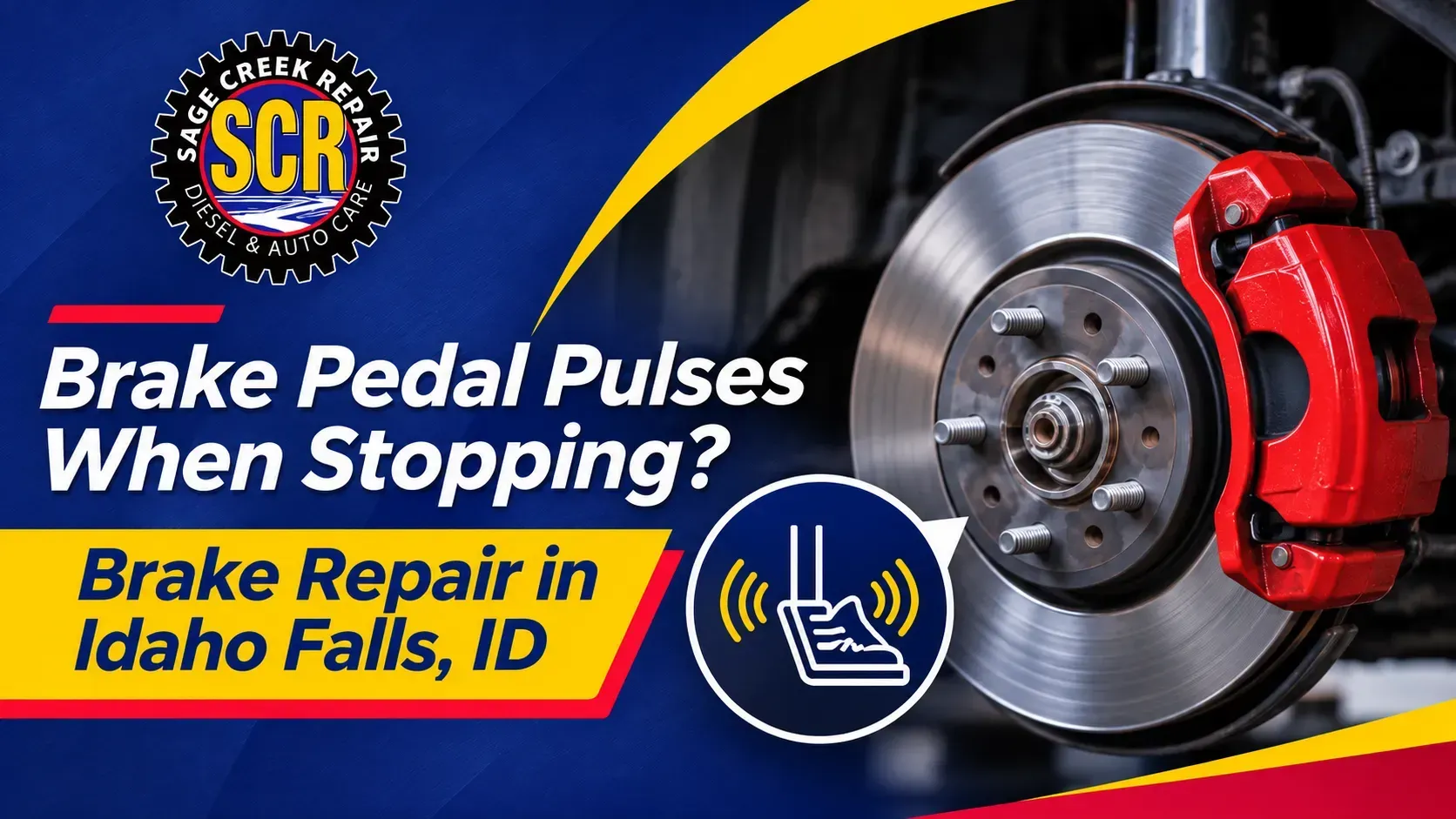
When your brake pedal pulses during braking, the cause may be uneven rotor contact, a sticking caliper, or normal anti-lock brake operation on a slick surface. A repeatable brake pedal pulsation during ordinary dry-road stops is not something to ignore. Our brake repair in Idaho Falls, ID includes inspection and measurements that help identify the cause before parts are recommended.
What Brake Pedal Pulsation Usually Means
Brake pedal pulsation usually means braking force is changing as a wheel turns. The pedal may push back against your foot once per wheel rotation or several times during a stop. The pattern, speed, and road surface help separate a mechanical issue from normal ABS feedback.
Rotor Thickness Variation and Runout
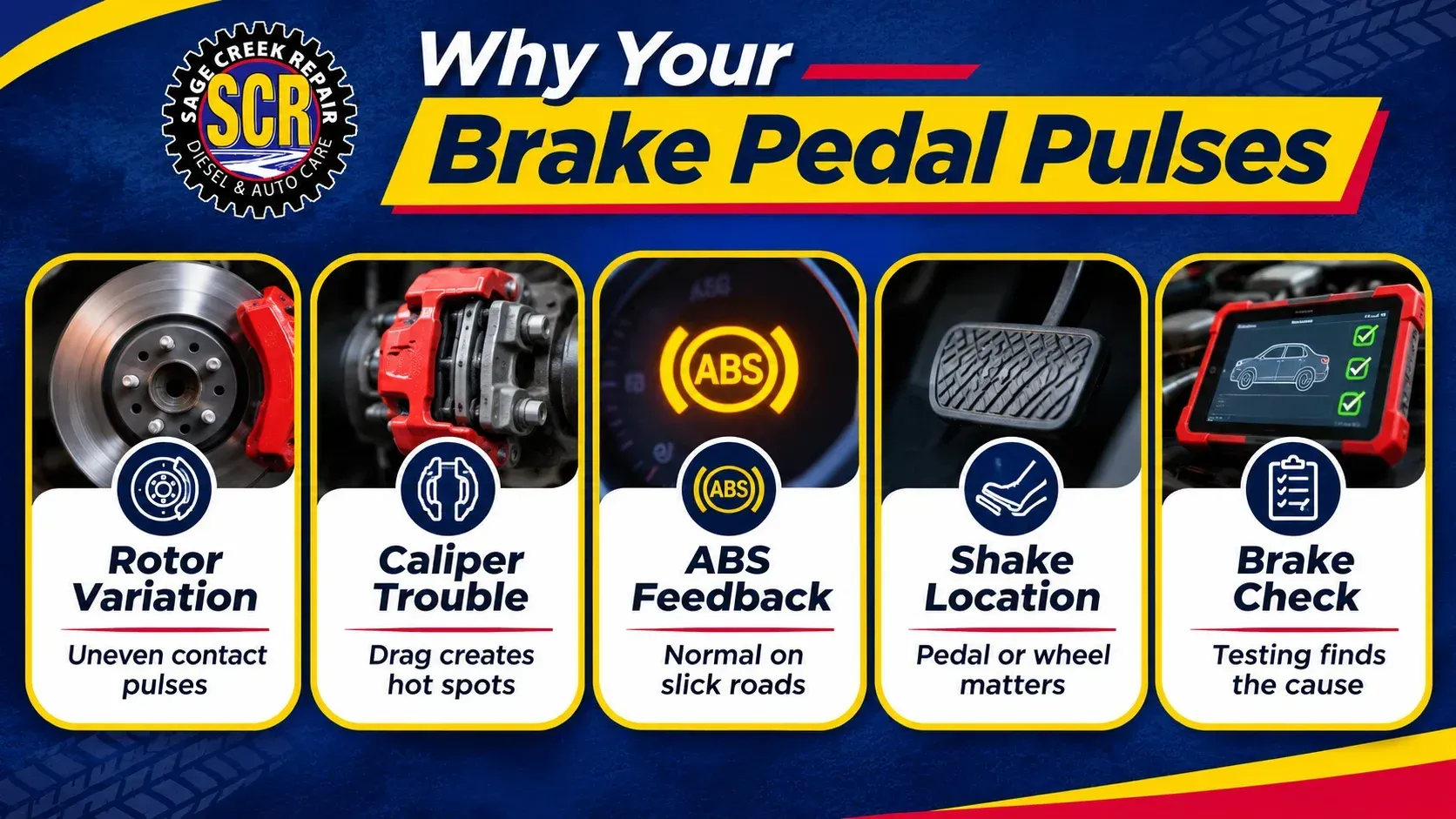
Rotor thickness variation is a common mechanical cause. Small differences in rotor thickness can move the caliper piston in and out as the rotor turns, sending a pulse through the pedal. Rotor runout, which is side-to-side movement as the rotor spins, can create uneven pad contact and lead to the same feeling.
Drivers often call this problem warped brake rotors, but the rotor may not look bent. Heat, uneven deposits, rust at the hub, or installation issues can produce a similar symptom. Measuring thickness and runout is more useful than judging the rotor by appearance alone.
Sticking Calipers and Uneven Pad Contact
A sticking caliper or slide can keep one pad in contact with the rotor. That drag may create excess heat, uneven wear, or a pull during braking. A hot wheel, burning smell, or vehicle drift can point toward a caliper concern, although an inspection is needed to confirm it.
When ABS Feedback Is Normal
ABS feedback can be normal when a tire is close to locking on snow, ice, gravel, or wet pavement. The system rapidly adjusts brake pressure, which can feel like a fast pedal buzz or chatter. Idaho winter driving often includes changing traction, so note whether the pulse happens only on slick roads or during every routine stop.
The Idaho winter driving guidance advises slower speeds, longer following distances, and gentle control on ice and snow. A brief ABS pulse during a low-traction stop differs from a steady rhythm that returns on dry pavement.
Why the Vibration Location Matters
The place where you feel the vibration helps narrow the inspection. Tell the technician whether the movement is strongest in the pedal, steering wheel, seat, or entire vehicle. Also note whether it begins only at highway speed or during low-speed stops around Idaho Falls.
Pedal Pulsation Versus Steering Wheel Shake
A pulse felt mainly through the pedal often points toward changing hydraulic pressure caused by the brake system or ABS. A steering wheel shake during braking may put more attention on the front brakes, wheels, steering, or suspension. Movement through the seat may suggest a rear-brake or rear-wheel contribution.
Speed, Heat, and Braking Pressure Clues
A vibration that appears during harder stops from higher speeds may become stronger as the brakes warm. A pulse during every gentle stop may follow a different pattern. Repeated stops along Yellowstone Highway, winter moisture, and road treatment can also expose corrosion or uneven contact that was less noticeable before.
Can You Keep Driving With a Pulsing Brake Pedal?
You should limit driving and arrange an inspection if the pulse repeats on dry pavement. Stop driving when the vehicle pulls sharply, the stopping distance increases, the pedal feels soft, a brake warning light stays on, or you smell extreme heat. Those signs can indicate a problem that affects braking control.
A mild, consistent pulse does not reveal how much service is needed. The vehicle may still stop, but continued heat and uneven contact can wear pads and rotors faster. Sage Creek Repair can check the symptom as part of our broader repair and maintenance services.
How We Diagnose Brake Pulsation
A brake vibration diagnosis combines your description with a road test, visual inspection, and measurements. We look for the condition that is creating the pulse instead of assuming every vibration needs the same repair.
Road Test and Symptom Review
The first step is confirming when the vibration occurs. Useful details include vehicle speed, brake pressure, road surface, recent brake work, and whether the symptom changes after several stops. These details help distinguish a brake concern from a tire, wheel, steering, or suspension issue.
Brake and Front-End Inspection
The inspection checks pad wear, rotor condition, caliper movement, hardware, and signs of overheating or fluid leaks. Tire and wheel condition may also matter when the steering wheel shakes. The same careful process applies whether you need Ford repair and maintenance or service for another make we handle.
Measurements and Repair Decisions
Rotor thickness and runout measurements show whether a rotor remains within specification. Caliper movement and pad wear patterns can reveal binding or uneven contact. The findings determine whether cleaning, hardware service, caliper repair, rotor service, pad replacement, or another correction fits the actual condition.
Takeaways
A pulsing pedal during normal dry-road braking often points to uneven rotor contact, caliper trouble, or another brake-system concern. ABS feedback can be normal on snow or ice, but a repeatable rhythm on clear pavement deserves a brake inspection.
Pay attention to where you feel the vibration, when it starts, and whether the vehicle pulls or takes longer to stop. Those details support a faster, more focused diagnosis and a repair plan based on measurements.
Frequently Asked Questions
Can a pulsing brake pedal mean the rotors are bad?
Yes, a pulsing brake pedal can result from rotor thickness variation or runout. However, caliper movement, hub condition, ABS operation, and other rotating parts should be checked before deciding the rotors are the cause.
Is brake pedal pulsation the same as ABS activation?
No, brake pedal pulsation is not always ABS activation. ABS usually produces a rapid buzz during a low-traction or hard stop, while a mechanical pulse may repeat with wheel speed during ordinary braking.
Why does my steering wheel shake when I brake?
A steering wheel shake while braking often directs attention toward the front brakes, wheels, steering, or suspension. A technician must inspect and measure those parts to separate brake-related vibration from a tire or front-end problem.
Can cold Idaho weather cause brake pulsation?
Cold weather alone does not usually create persistent brake pulsation, but winter moisture, corrosion, and temperature changes can make an existing issue easier to notice. ABS may also pulse normally when tires lose traction on ice or packed snow.
How is brake pulsation diagnosed?
Brake pulsation is diagnosed through a symptom review, road test, brake inspection, and rotor measurements. Technicians may also check tires, wheels, steering, suspension, and ABS data when the vibration pattern points beyond the friction brakes.
Schedule Brake Repair in Idaho Falls, ID
If your brake pedal pulses during routine stops, contact Sage Creek Repair in Idaho Falls, ID to arrange an inspection. We can identify the source of the vibration and explain our findings before beginning any repairs.
Call (208) 523-0331 or visit us at 1870 South Yellowstone Highway, Idaho Falls, ID 83402 to schedule brake service.
Share us on:

Hi, I’m Brett Spaulding, owner of Sage Creek Repair in Idaho Falls, ID. My father founded this shop in 1979, and I’ve worked here full-time since 1999, starting as a service advisor before moving into management. April Spaulding bought the business in 2015. I’ve also completed formal shop-management training through Management Success, ATI, and Shop Coach.
I grew up watching my father earn trust through honesty and integrity rather than marketing, and I’ve worked to carry that legacy forward. My goal is a repair experience with no pressure or guesswork: just clear answers, real evidence, and respect. That’s why every job runs through a digital inspection with photos and videos, so you can see what we see before you approve any work.
Sage Creek Repair is a family-owned, second-generation shop, and our ASE-certified technicians work on domestic and import vehicles, including Ford, Chevrolet, Honda, and Toyota. We handle everything from engine diagnostics and transmission repair to brakes, steering, and routine maintenance, always taking time to explain what your vehicle needs. Whatever brings you in, I want you to leave informed, confident, and glad you came to us.